-
How Much Does Mobile Home Ductwork Repair Cost in Tyler, TX?
Mobile home ductwork repair in Tyler, TX costs anywhere from $220 to $880 on average for a typical repair, like reconnecting a crossover duct or replacing a crushed or leaking section under the floor. The price depends on how much duct needs replacing, crawl space clearance, belly board and insulation repair, and any rodent, water, or mold damage. Contact us with the details for pricing.
-
Do You Repair Ductwork in Single-Wide and Double-Wide Mobile Homes?
Yes, we work on single-wide, double-wide, and triple-wide homes, old and new.
-
Do You Work on Homes in Mobile Home Parks?
Yes, we work in parks and communities as well as on private land.
-
Do You Service My Area?
Yes, in most cases. Send us the address of the home and we'll confirm we cover it.
-
How Soon Can Someone Come Out to Look at My Ducts?
We usually move homes with no heat or no cooling to the front of the line. Other repairs go on the next open date, which can be further out in the height of summer, and we'll give you that date when you contact us.
-
What Information Do You Need When I Contact You?
We need the address, whether it's a single-wide or double-wide, and which rooms are affected. Photos of torn belly board, ducts on the ground, or air blowing out of the skirting help a lot.
-
Will I Need to Be Home During the Repair?
No, most of the work happens under the home. We do need to get inside at some point to check the registers and furnace, and we'll set that up with you.
-
Can I Request Duct Repair if I Rent My Mobile Home?
Yes, but you'll need your landlord's approval first, since the ducts are part of the home. We're happy to talk with the owner directly about the problem and the price.
-
Do I Need a Permit for Mobile Home Duct Repair?
No, not usually for repairs to existing ducts. Some areas want one for new duct runs or a full replacement, so we check with the local building department or state manufactured housing office before larger work.
-
Can I Get a Price Before the Work Begins?
Yes, we look under the home and give you a price before any repair starts. If we open the belly and find more damage than expected, we stop and talk with you first.
-
Will Homeowners Insurance Pay for Duct Repair?
Yes, sometimes, if a covered event like a storm or burst pipe caused the damage. Ducts that rusted or came loose over time usually aren't covered. We can give you photos and an itemized invoice either way.
-
How Long Does Mobile Home Duct Repair Take?
We usually finish a single repair, like reconnecting a crossover or sealing a leaking section, in one visit. Replacing long runs of duct or a lot of belly board in a tight crawl space can take two or three days.
-
Why Is Only Half of My Double-Wide Heating or Cooling?
The crossover duct that carries air from the furnace side to the other half has usually come loose, torn, or been crushed. It's a common double-wide problem, and we can usually fix it in one visit.
-
How Do I Know if My Mobile Home Ductwork Is Damaged or Leaking?
Rooms that won't heat or cool, weak airflow at some registers, higher energy bills, and air blowing out of the skirting are the usual signs. Tell us which ones you're seeing.
-
How Can I Tell if the Problem Is My Ducts or My AC Unit?
Compare the air leaving the unit with the air at the registers. In summer, registers running about 15 degrees warmer, or rooms getting barely any air, point to the ducts. We check both so you don't pay for the wrong fix.
-
Why Is Air Blowing Out of My Skirting Vents?
A supply duct under the home has most likely come loose or torn open, so you're heating or cooling the crawl space instead of the rooms. Have us fix it soon, since it wastes energy every hour the system runs.
-
Will Fixing My Ducts Lower My Energy Bill?
Yes, in most cases. Typical duct systems lose 20 to 30 percent of their air to leaks, and under a mobile home we often find that air going straight into the crawl space.
-
Can You Repair My Ductwork Without Replacing the Whole System?
Yes, a loose crossover, a few leaking joints, or one crushed section are all repairs. We only recommend full replacement when the trunk is rusted through in many places, or rodents or mold have spread through the system.
-
Can You Replace All the Ductwork in My Mobile Home?
Yes, when the ducts are rusted, moldy, or chewed up throughout. A full replacement typically runs $1,500 to $3,500 on a single-wide and more on a double-wide, so we only recommend it when repairs won't hold.
-
Can You Replace the Crossover Duct on My Double-Wide?
Yes, we replace it with insulated flex duct rated for outdoor use, usually 14 or 16 inches across to match the old one. We seal both collars and strap it up off the ground.
-
Can You Fix a Duct That Fell Off or Came Loose Under the Home?
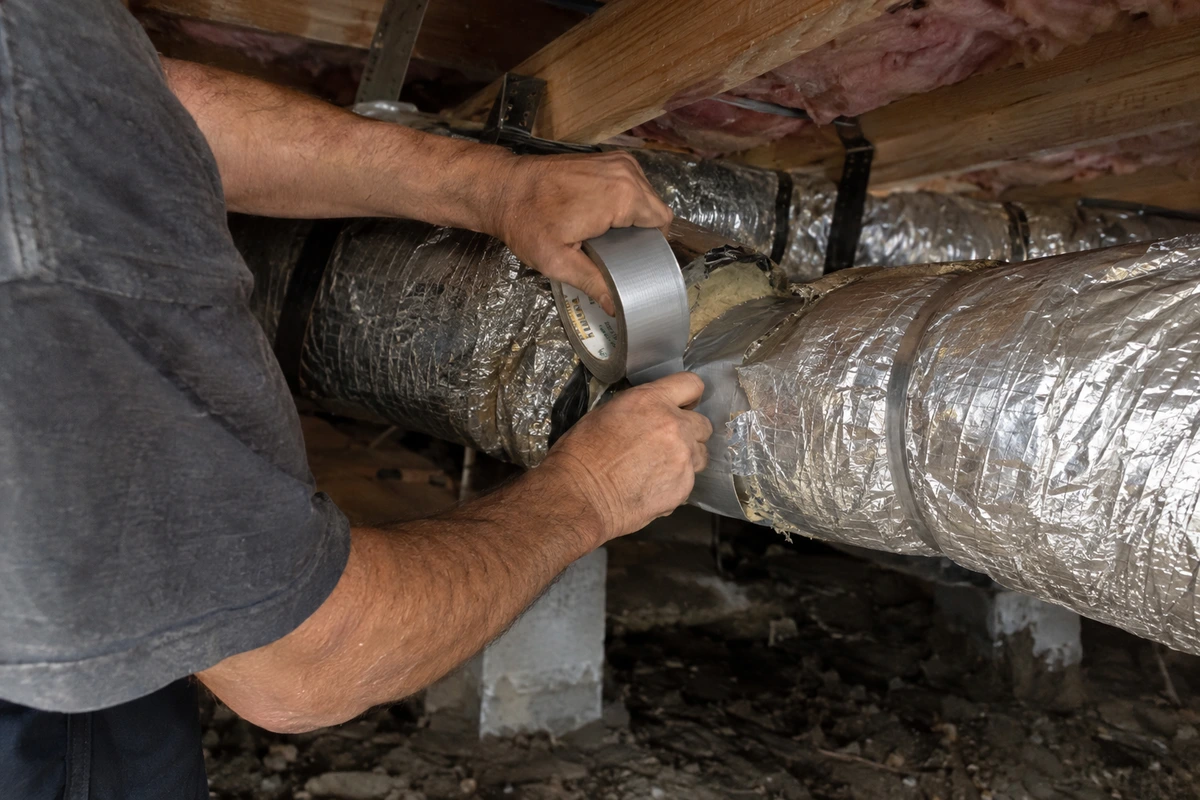
Yes, we reconnect it to the collar, fasten it with screws or a strap, and seal the joint with mastic or listed foil tape. Then we support the run so it doesn't pull loose again.
-
Can You Repair a Crushed or Collapsed Flex Duct?
Yes, we replace the crushed section, since flattened flex duct chokes off airflow.
-
Can You Repair Ducts Damaged by Rats or Mice?
Yes, we replace the duct and insulation wherever rodents nested instead of patching it, then reseal the belly so they can't get back in. Pest control should deal with the rodents first.
-
Do You Repair the Belly Board After Working on the Ducts?
Yes, we close every opening we make with bottom board tape or new belly material and seal the edges. Any insulation we pull out or find missing goes back in first.
-
Can You Fix Ducts That Are Sagging or Lying on the Ground?
Yes, we lift them, replace wet or crushed sections, and hang them on straps. Federal rules keep crossover ducts off the ground, usually with supports no more than 4 feet apart.
-
Do You Insulate Ducts That Are Exposed Under the Home?
Yes, any exposed duct we repair gets insulated. Manufactured home rules call for at least R-8 with a vapor barrier on ducts exposed to outside air, and that also keeps them from sweating in humid weather.
-
Why Is Water Dripping From the Ducts Under My Home?
Summer dripping usually means the ducts are sweating because insulation is missing or torn. We replace the insulation and check for a plumbing or AC drain leak too.
-
Can I Fix Mobile Home Ductwork Myself?
Yes, if it's small, like resealing a register boot. Most repairs mean crawling under the home and cutting into the belly, and that's the part most owners hand off to us.
-
Can You Repair the Main Trunk Duct Inside the Floor?
Yes, we open the belly below the trunk, seal the leaking seams and holes, and close it back up. Tell us which registers have weak airflow.
-
Can You Fix Rusted Holes in Metal Ductwork?
Yes, small rust holes can be patched and sealed, but a trunk rusted through in several places is usually better replaced. We also look for the water leak causing it.
-
Can You Replace a Loose or Broken Floor Register Boot?
Yes, we reseal or replace the boot that joins the floor register to the duct. A gap between the boot and the floor is a common air leak, and we close it with mastic.
-
Can You Fix Return Air Problems in a Mobile Home?
Yes, we check the return grilles, the filter, and whether closed rooms have a path back to the furnace. A system that pulls its return air from under the home is a costly defect, and we correct it.
-
Can You Repair Ductwork in the Ceiling of a Mobile Home?
Yes, some homes run their ducts in the ceiling. We work from inside, through a closet or attic access, rather than cutting through the roof, which invites leaks.
-
Can You Repair Ductwork With Mold in It?
Yes, we replace moldy duct and any wet or moldy insulation, since that insulation can't be cleaned effectively. We also track down the moisture so it doesn't come back.
-
Can You Fix Ductwork After My Home Was Moved or Releveled?
Yes, moving, releveling, or settling piers can pull duct connections apart, especially at the crossover. We reconnect, reseal, and resupport the runs once the home is set and level.
-
Can You Fix a Floor Vent That Has No Duct Under It?
Yes, a register open to the crawl space means the duct below fell off, rotted away, or was removed, and we run new duct to it. Until then, set something over it so pets and pests can't get through.
-
Is It Safe to Run My Furnace With a Disconnected Duct?
No, not for long. A loose duct sends your heat into the crawl space, runs up the bill, and can leave rooms cold enough for pipes to freeze.
-
Should I Tape Over or Close Off a Damaged Vent Until You Get Here?
No, closing off part of the system chokes airflow and can leave parts of the home unheated. Leave it as it is and let us know which vent is damaged.
-
Should I Change the Furnace Filter Before You Come?
Yes, a clogged filter cuts airflow and can make the ducts look like the problem. If airflow is still weak with a clean filter, that tells us a lot.
-
Do I Need to Remove the Skirting So You Can Get Under the Home?
No, we use the skirting access door or take off a panel or two and put it back when we're done. Let us know if your skirting is brick, block, or anything that doesn't come apart easily.
-
Can You Work Under a Home With a Very Low Crawl Space?
Yes, in most cases, though very tight clearance can take longer and cost more. Tell us roughly how much room there is between the ground and the belly.
-
Do You Use Duct Tape to Seal Mobile Home Ducts?
No, regular cloth duct tape dries out and lets go. We use mastic or foil tape listed under UL 181, which is what manufactured home rules call for.
-
Which Is Better for a Mobile Home, Flex Duct or Metal Ductwork?
Neither is better everywhere. Metal lasts longer and stands up to rodents better but takes more labor, while insulated flex costs less and is easier to route under the home. We find that how well it's sealed and supported matters as much as the material.
-
How Long Will a Mobile Home Duct Repair Last?
A repair sealed with mastic and properly supported typically lasts 10 to 20 years. Foil tape alone tends to give out sooner, which is why we use mastic on joints under the home. Rodents, moisture, and shifting piers can shorten either.
-
Do You Clean Mobile Home Air Ducts?
Yes, when there's visible mold, signs of pests, or ducts clogged with debris. Routine yearly cleaning usually isn't needed.
 Mobile Home Ductwork Repair Kings
Mobile Home Ductwork Repair Services in Tyler, TX
Get Mobile Home Ductwork Repair Quotes
We provide mobile home ductwork repair, crossover duct replacement, and underbelly duct sealing services in Tyler, TX for single-wide, double-wide, and other manufactured homes, working with homeowners, landlords, and park owners. Contact us now for a free estimate.